Monday, October 6, 2014

Real China: Kaiping

The next day we decided to go to a small town in Southern China called Kaiping. They have a UNESCO world heritage site there to protect the ancient city and the diaolou--watch towers and residence buildings that were built during the early 1900's. Those of you interested in more history its at the end of the post.


Since the city is hard to get to (the bus took 4 hours) there were not too many tourists and we only saw one other foreigner the whole day. It was cool to check out a place that had a good deal of history but was not too crowded!


Here we gooooooo! 


Typical tourist shops


These must be local specialities because I have never seen them at any other touristy places in China
This is fried tofu with pieces of pork on them


On the left you can see dried fruit and on the right is dried fish/sardines (eek ew)

Hard boiled eggs--they had small ones and huge ones (one they said was duck eggs and the other was goose eggs)


Sugar cane juice (surprisingly not sweet)


The first place we went was Li Gardens, which was owned/is owned by a Chinese family that emigrated to America. You can see the influence of western architecture--these are all residences


This is a Chinese kitchen in the 1920s


Here is another Chinese kitchen--this is the stovetop (no oven)


This is where they kept clean water


This is how they made soy milk


Next to the historic houses, they had created a gorgeous garden


with many strange artifacts in it...like a cinderella carriage 


Next up the three of us took this little tuk-tuk to the next village. (so uncomfortable) 


The next village had residences and watch towers--and thousands of tacky pandas everywhere (which meant tons of photo opportunities for chinese people) 


You can paint your own panda--some interesting pandas out there


This picture is so china--a beautiful historical site with some kind of tacky touch--result fabulous picture opportunities 


The last part of the trip was a place where movies had been filmed

The town looked old and charming


The Paris Hotel


River market


A kung fu training/practice thing


the highlight--someone brought their pet pig!


recycled gadgets at the market


Overall it was a lot of traveling in one day and the heat/humidity was exhausting. But it was really neat to see and surprisingly not too crowded  


Kaiping was devastated by the Opium War from 1800-1840s and was in a state of desperation and social chaos. During this time, the West began to recruit Chinese to work abroad. As a result, many Kaiping natives emigrated to South East Asia, America, Canada, Australia and other countries looking for work. The gold rush and building the trans-continental railroad attracted many immigrants to America. They faced a great deal of discrimination, but gained knowledge and money to send back to China to develop their country.

Through this, Kaiping eventually transformed from devastation to a place of prosperity. Investment and development was initiated by Chinese living abroad. The western influence is evident in the architecture--which are called diaolous. They are scattered across the countryside and became a UNESCO world heritage site in 2007.


Sunday, October 5, 2014

Hong Kong: Protests (go democracy!) boat rides and iPhones

From Guangzhou, I took a 1 hour fast rail to Shenzhen, where I crossed through customs into Hong Kong. 

Helllllllo Hong Kong! Hong Kong is like England but hot and humid with palm trees and occasionally more sunshine. It was pretty humid and overcast the day I was there (not to be mistaken for pollution). 

The first thing I did was check out Victoria Harbor--GORGEOUS. 


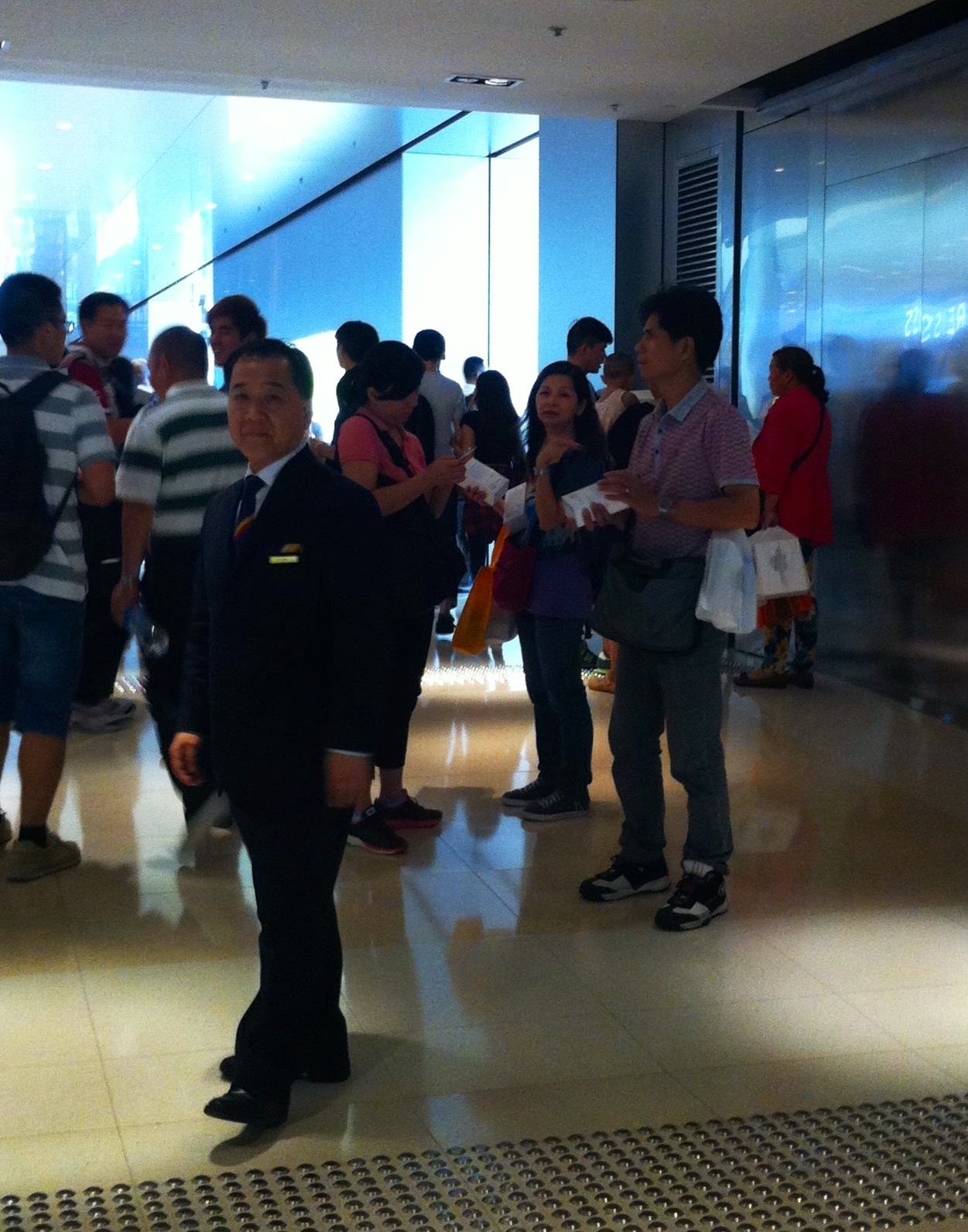
Next line of order--a new Macbook charger.           I headed to IFC--one of the biggest apple stores and upscale malls right in Central on HK Island. Apple was PACKED. (Mainlanders starting vacation a day early?)                                          In China there are Apple stores in big cities, but all Apple products cost 20% more so many people head to HK--also the iPhone 6 has not been released in the mainland. 
I was astonished to see people selling iPhone 6s right in the mall outside of the Apple store--you can see a manager of the mall was standing by to keep order--but still I think in America it's illegal to solicit things in a mall. 


Right outside the mall there were people everywhere selling iPhone 6's--they are real but were selling for a little cheaper. I wonder where they came from?


After purchasing my charger (totally didn't realize it would have a Hong Kong outlet--grrr), I took the ferry back across Victoria Harbor to check into my hotel and meet up with my friends. If you are ever in HK this is a 10 minute trip and is a must see.

Check it out: Hong Kong is adding a ferris wheel to its harbor. I may have to come back when its finished...


On the ferry this chinese guy took about 150 selfies. (Check out the half lifted shirt--all men in China do this to deal with the heat) by the end of the trip he had made a new friend


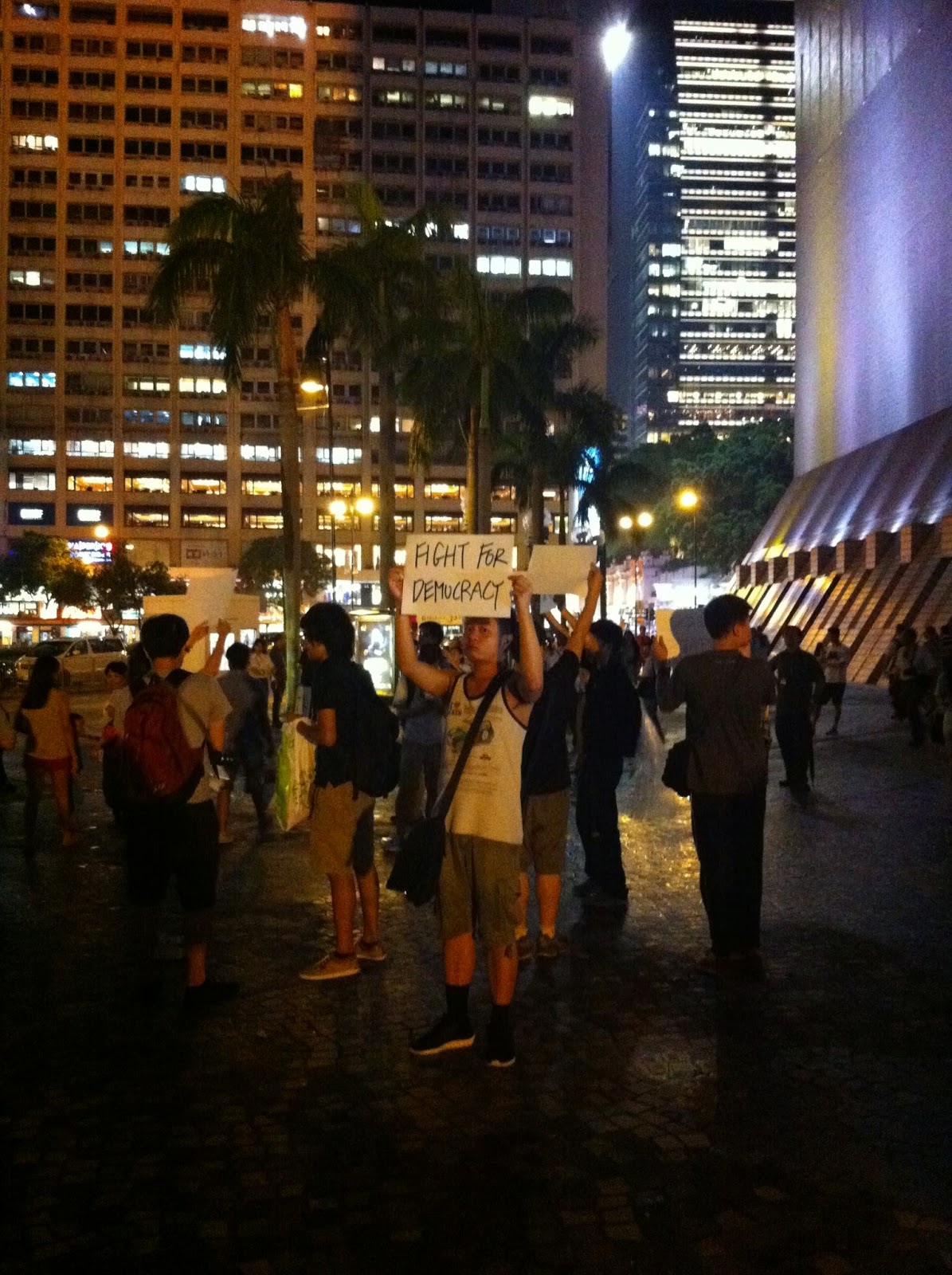
On the way to my hotel I saw many people who were part of the occupy central (democracy) movement and protesting the new leader for HK who was selected by Beijing


The newspapers they were handing out were pretty shocking

Shortly after the protests started, mainland China started blocking Instagram. While the protests are the front page news of the rest of the world, there is very little coverage in mainland China. It will be interesting to see where it goes from here and if the mainland uses its army force 
(if so things can/will quickly escalate--according to HK law they should not use the PLA  (People's Liberation Army) unless the country is in danger) 


I was amazed that mainlanders were just walking past with no interest at all--they really don't have any interest in politics and are just in HK to shop. 

After that I met up with friends and we got ready for our harbor boat cruise 

The science of making cheap beverages...


So many selfies!


HK watch tower


The lights show on Victoria Harbor...a little underwhelming


As the night went on, a few protesters gathered, but most are stationed at a different location (in Causeway Bay) 


The boat/harbor tour


The next day we went to a traditional Hong Kong restaurant, went to see the protests and then saw a Daoist temple. (I thought it was a Buddhist temple---I need to study the differences in the Asian religions) 

Many articles have commented on the protests and their affect on the economy--I think that's what "preserve our rice bowls" refers to. 


Most Cantonese restaurants have an open kitchen


The protests--they were relatively calm during the day, but pick up at night when people are off work and it is cooler out.

--their symbol is an umbrella so many people were painting umbrellas


It was SO HOT out so many people were providing water and there were first aid tents everywhere. 


Spreading the word! 

It was pretty neat to see signs everywhere because they were all in different languages. There was a lot of media coverage and thousands of people taking photos. While the protestors are being very strategic, the way that China handles this needs to be very strategic as well because the whole world is watching (as opposed to the event 25 years ago...)

Here are pics from the temple....


Anddddd back to Shenzhen!